Project Timeline
The Journey So Far.
How a 1985 Chrysler Town & Country wagon found its way back into my life, joined the family, and turned me into the proud owner of a small diagnostic laboratory.
Where It Started
This one started with a Marketplace listing and a joke that got out of hand.
Most project-car stories start with a plan. This one did not.
What follows is how that wagon found its way back into my life — and how it's slowly becoming the wagon I always wanted it to be.
This is the big picture. For every individual job, mistake, and small victory, see Everything I've Done.
The One I Lost
At sixteen, I owned a Chrysler Town & Country wagon. It wasn't fast, fancy, or cool by any normal measure. It was mine. In 2000, someone stole it from my driveway, and it was never recovered. I never stopped looking for another one.
The Marketplace Listing
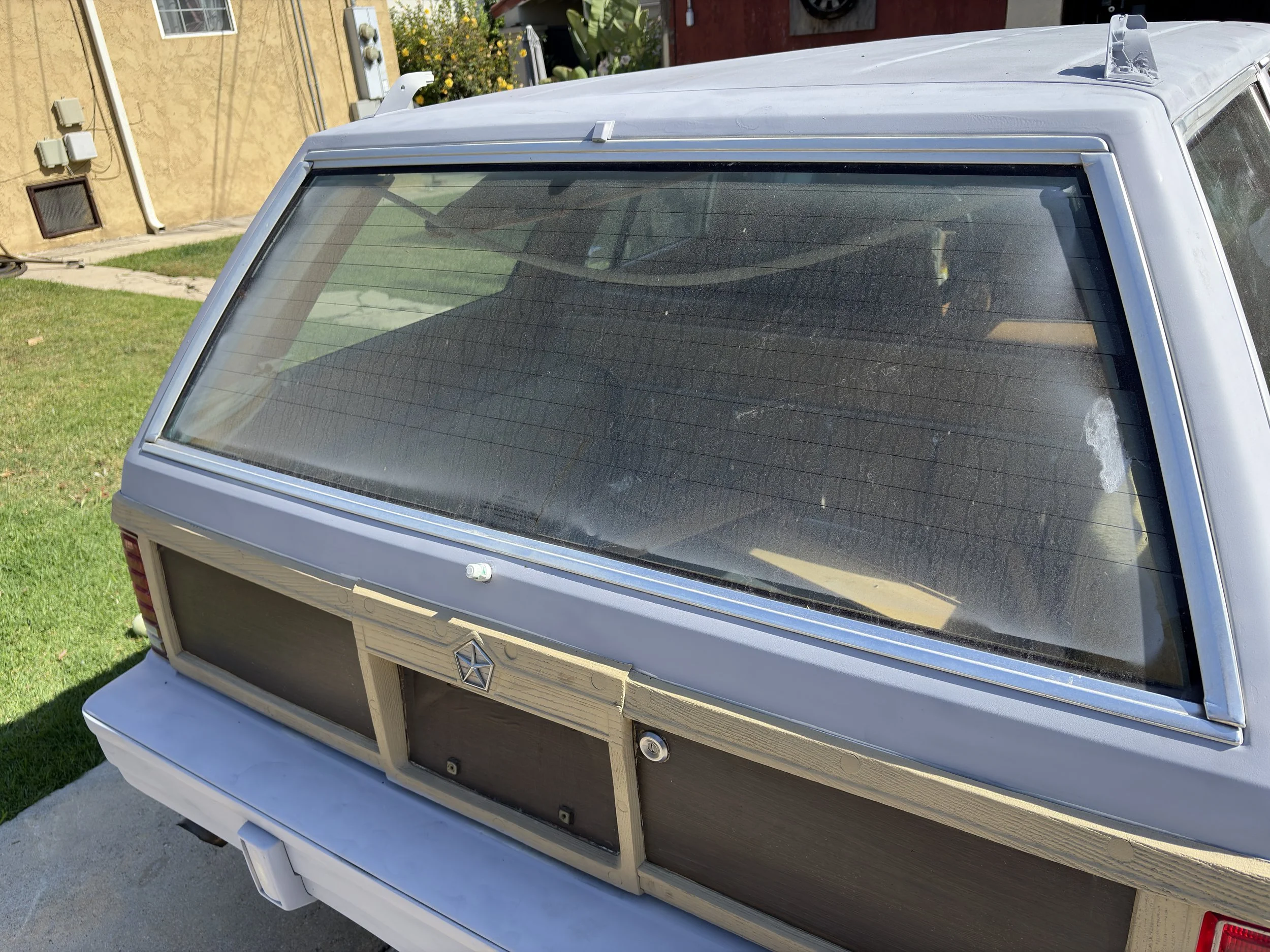
Then a 1985 Chrysler Town & Country wagon showed up on Facebook Marketplace. Same year, same body, same fake woodgrain, same ridiculous charm. I joked that I'd buy it in a heartbeat if I had an extra $3,400 lying around. My friends took that as a challenge.
Norma
Digging into the wagon's history, I learned its previous owner was named Norma — same as my grandmother. Probably a coincidence. Felt like a sign anyway.
The First Drive
I don't remember most of that first drive. I remember the feeling — pure disbelief, and a grin I couldn't wipe off. The paint was rough and the back was full of spare parts. Didn't matter. I had a wagon again.
Settling In
Mostly I cleaned it, learned it, and made plans I wasn't really qualified to make yet. I drove it every chance I got. People waved. People smiled. Strangers told me about the wagons they used to own. This car is a conversation magnet.
The Work Begins
Then it got hard to start. Then it stalled. Then it overheated. The wagon stopped being something I could just drive and became something I had to understand. That's the exact moment this stopped being a fake-woodgrain fan blog and became a repair diary.
Not Everything Is the Engine
Small jobs turned into actual progress.
Not every chapter here is about the engine. Some jobs worked on the first try. Others just handed me a new problem.
Small Wins
Twist pins fixed the sagging headliner, a paint pen brought some shine back to the dash trim, and a little lubricant brought the factory power locks back from the dead.
Browse the repair archive →Dash Adventures
Pulled the instrument cluster, found a harness someone had unplugged years ago, ordered white LEDs, and learned that reassembling forty-year-old plastic takes a very specific kind of patience.
Read the cluster adventure →Learning the Engine
PCV system, throttle body, vacuum lines, boost leaks, cooling system — I went through all of it hunting for whatever was causing the hard starts and stalling.
Read the 2.2 Turbo guide →The Current Chapter
The overheating investigation finally has a suspect: cylinder #1.
New thermostat, same overheating, same stalling. Pulling the spark plugs told a different story — all four came out sooty, and #1 had clear liquid on its firing tip.
The compression test made that plug look even worse. Cylinder #1 measured 61 psi, twice. Cylinders #2, #3, and #4 all held steady at 140. Coolant also surged out of the open radiator neck while the engine was cranking.
| Cylinder | Compression | What I Saw |
|---|---|---|
| #1 | 61 psi | Repeated result; plug tip had clear liquid |
| #2 | 140 psi | Matched cylinders #3 and #4 |
| #3 | 140 psi | Matched cylinders #2 and #4 |
| #4 | 140 psi | Matched cylinders #2 and #3 |
What this proves: cylinder #1 has a real compression problem. A head gasket or the head itself is the leading suspect — the exact leak path isn't confirmed yet.
Where Things Stand Now
The wagon's parked. The exact problem isn't found yet.
| Metric | Status | Detail |
|---|---|---|
| Driving Status | Off the Road | For Now |
| Confirmed Problem | Low #1 Compression | 61 psi |
| Leading Explanation | Head or Gasket | Not Proven |
| General Attitude | Still Optimistic | Of Course |
Next: perform a cold cooling-system pressure test and look for pressure loss or visible leakage.
Then: leak-down test cylinder #1 to find out where its pressure is escaping.
After that: decide whether the evidence points to the gasket, cylinder head, valves, rings, or another internal sealing problem.
I wanted to stop guessing and start collecting evidence. Mission accomplished — I've now got enough evidence to justify buying even more tools.
Still Moving
The story is still moving.
The wagon isn't finished and the latest problem isn't solved. That's exactly why I'm documenting it — every test, mistake, and small win becomes the next part of the story.