
The Coil Spring Situation
The rear sits low, the ride feels floaty, and one cheap spacer experiment already failed. Before I buy more parts, I need to separate the spring problem from the shock problem.
Five answers before the wagon gets lifted.
Do worn rear shocks make a car sit low?
Conventional shocks mainly control spring and body movement. They normally do not support the vehicle's weight, so a low rear stance points more toward springs, load, mounting points, or another ride-height issue.
Are the wagon's rear shocks bad?
Still unknown. The ride feels floaty, but I have not confirmed a leak, damaged mount, failed bushing, or uncontrolled bouncing.
Did the coil spring spacers fit?
No. The spacers I bought would not fit between the coils. That confirms the parts were wrong for this installation, not that the springs themselves are bad.
Should I force universal spacers into place?
No. A suspension part that does not fit should not be forced, trimmed, or improvised into place without a verified application and safe installation method.
What happens next?
Measure the ride height, inspect both springs, seats, shocks, bushings, mounts, tires, and rear load, then identify the correct parts before buying anything.
Low and floaty are observations, not a diagnosis.
The 1985 Chrysler Town & Country wagon rides comfortably, but it also feels floaty and leans more than I would like. The rear appears to sit low. Those details justify an inspection, but they do not prove that any single part has failed.
The distinction matters because springs and shocks have different jobs. The coil springs support the wagon and establish ride height. The shocks slow down the motion of the springs and body. A tired spring can contribute to sag, while a worn shock can contribute to extra bounce, roll, or poor control. Either, both, or neither may be the actual problem here.
What happened
What inspection must answer
The cheap spacer plan lasted several minutes.
I bought coil spring spacers hoping to add a little rear ride height without turning this into a large suspension project. They would not fit between the coils. That was the end of the attempt.
I originally considered trying again with the rear wheels removed for better access. Better access does not change incorrect fitment, so the safer plan is to identify the springs and choose a repair made for the actual suspension.
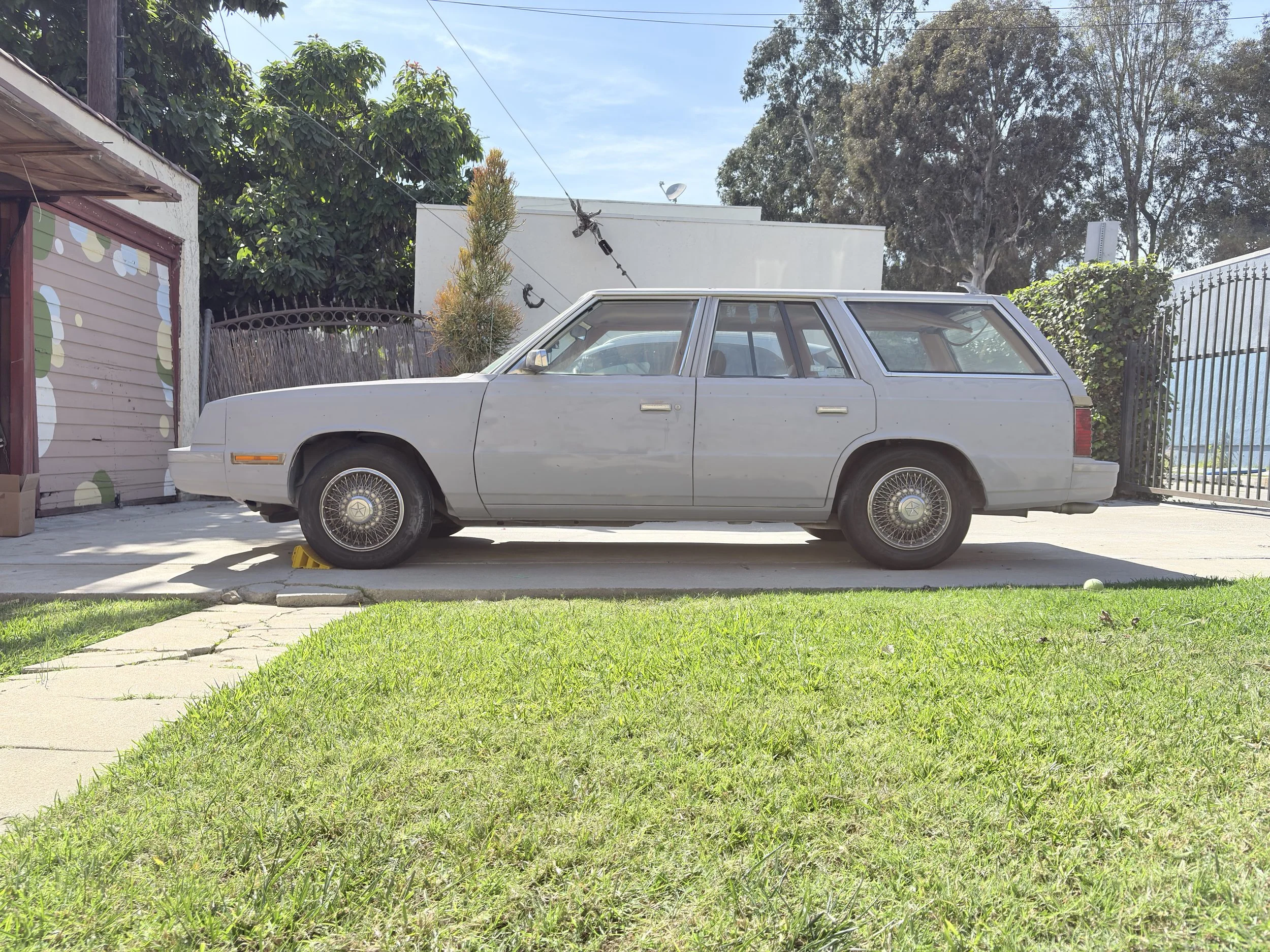
What happens before I spend money.
Park it level and remove variables.
Use equal tire pressures, empty unnecessary cargo, and record the fuel level and anything that must remain in the wagon.
Measure before lifting.
Measure from the center of each rear wheel to a repeatable body reference point. Compare left to right and save the numbers. A factory ride-height specification still needs to be verified before calling the absolute height wrong.
Lift it safely.
Use solid ground, wheel chocks, the correct lift points, and rated jack stands. Stop if the support points are rusted, damaged, or unclear. Never work under it supported only by a jack.
Inspect the complete rear suspension.
Check both coil springs and their seats, shocks and bushings, mounting hardware, axle and control-arm bushings, tires, brake hoses, and nearby structure. Photograph labels, marks, corrosion, cracks, leaks, and anything sitting out of position.
Identify parts before ordering.
Use the 1985 Chrysler service and parts information plus measurements from the installed components. Marketplace fitment and a similar K-body listing are leads, not proof.
Choose the repair that matches the evidence.
If the springs or seats cause the low stance, address those. If the shocks fail inspection, replace the correct pair. If both systems are worn, plan both rather than asking one part to do the other's job.
Ride height versus ride control
A conventional shock absorber damps motion. A coil spring supports weight. Replacing shocks may improve control if the current shocks are worn, but it should not be sold as the automatic cure for a low rear stance.
No brand winner yet
Monroe, Gabriel, and KYB names appeared during the first round of research, but brand reputation does not confirm fitment. I am not recommending a shock or spring until the installed parts and correct application are verified.
What supports this page.
The project record supports the low-looking rear, floaty ride, failed spacer fit, and the fact that no rear suspension parts have been installed.
Los Angeles Public Library Chilton access is the starting point for the correct inspection procedure, ride-height information, and application identification.
Monroe's explanation of shocks and struts describes conventional shocks as devices that control spring and suspension movement rather than support vehicle weight.
KYB's inspection guide connects excessive bounce and body movement with lost ride control while emphasizing actual inspection and evaluation.
The low-compression diagnosis explains why road testing is paused, and the repair archive connects the rest of the wagon project.
Still Floaty. Still Diagnosing.
The first spacer did not fit, no suspension parts have been replaced, and that is okay. The next useful step is measurement and inspection, not another round of random parts roulette.