The cooling problem got more specific.
The thermostat did not solve the overheating. A wet #1 spark plug, one very low compression reading, and coolant surging from the radiator neck changed this from a general cooling-system check into a much more focused engine diagnosis.
What the cooling-system evidence says.
The thermostat replacement ruled out one simple answer. The later tests found a serious cylinder #1 problem that may be connected to the overheating.
Did replacing the thermostat fix the overheating?
No. The replacement was completed, but the wagon continued to overheat and push coolant from the radiator-neck area.
What cooling-system clues were found?
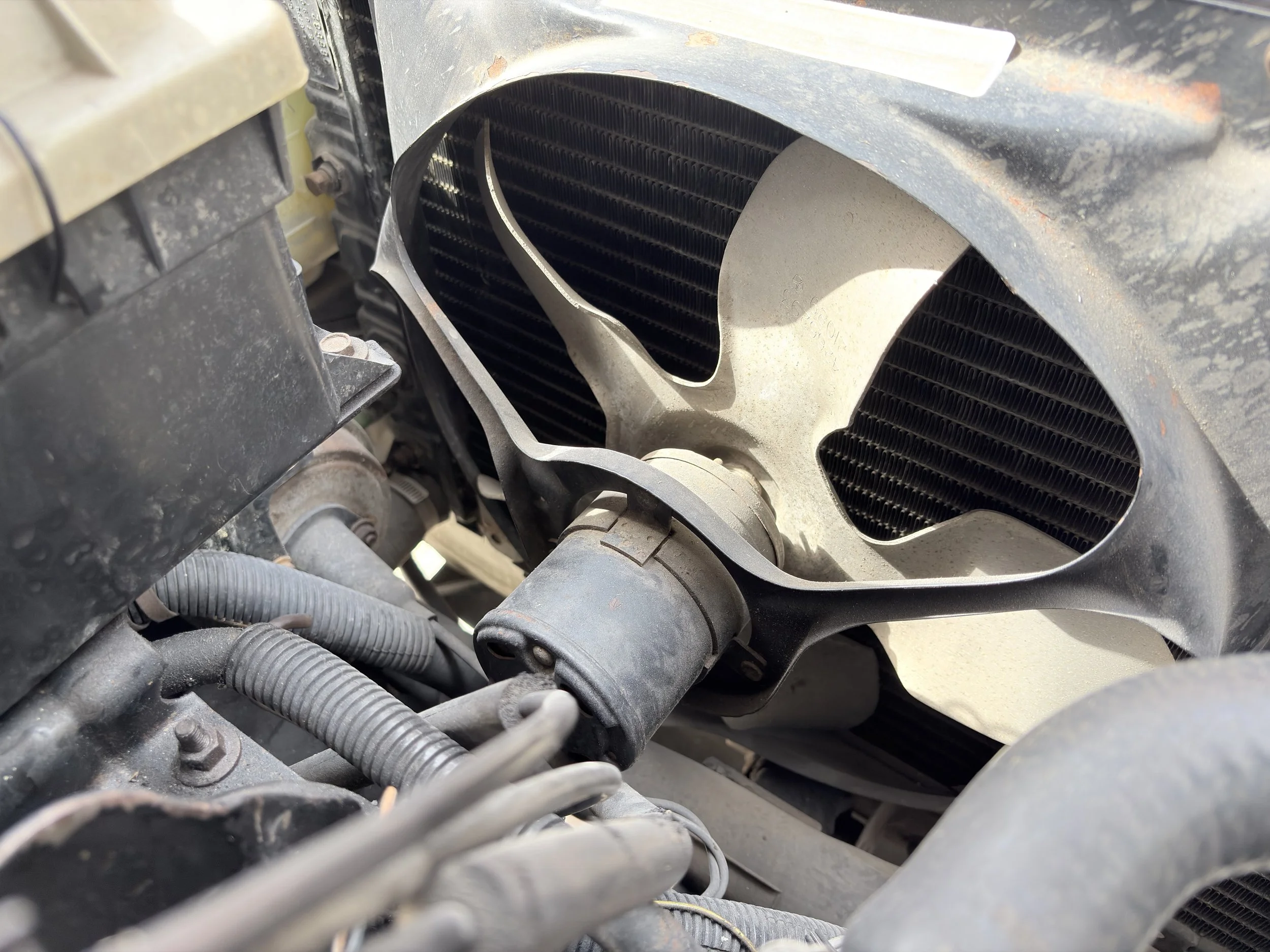
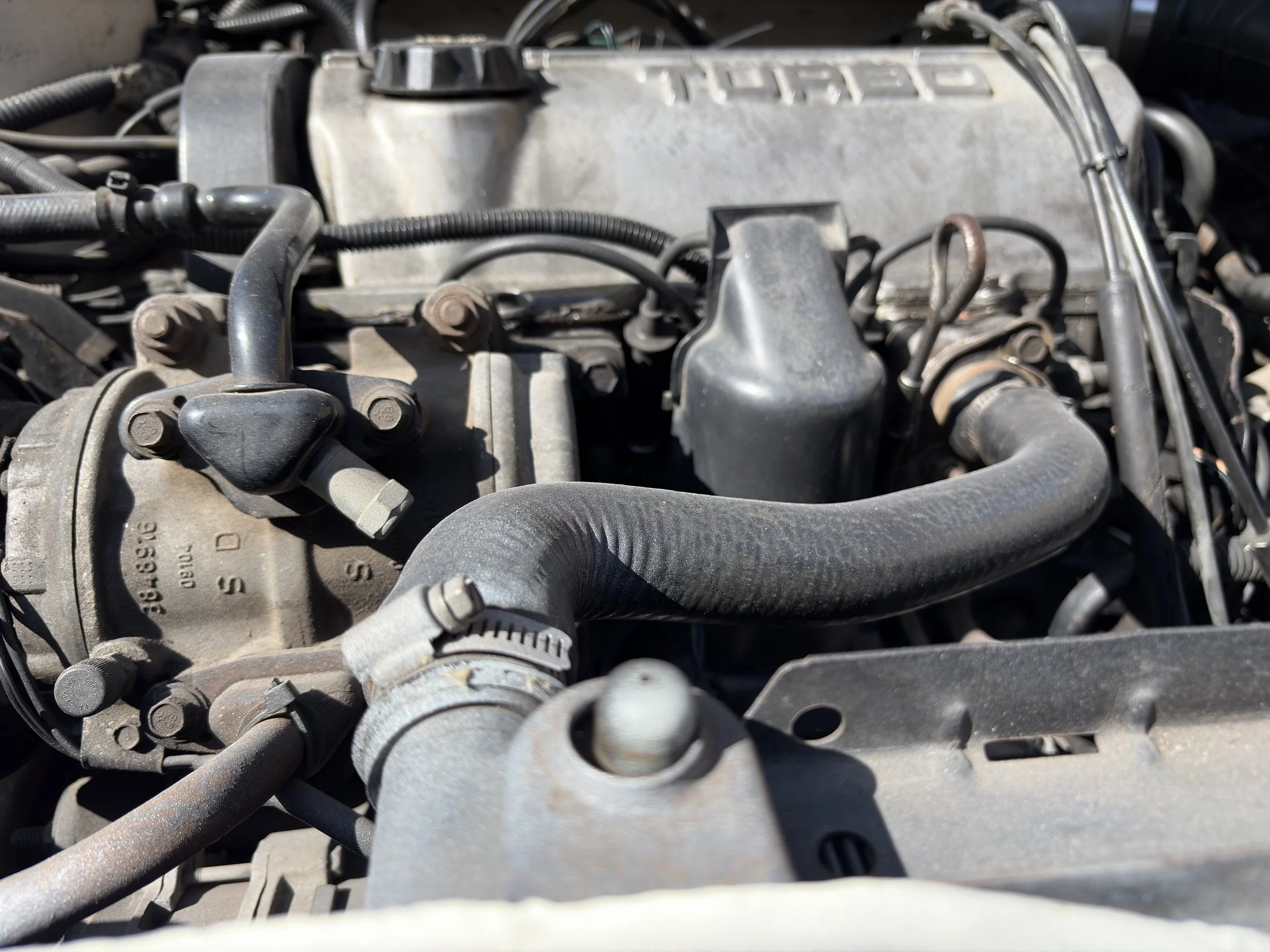
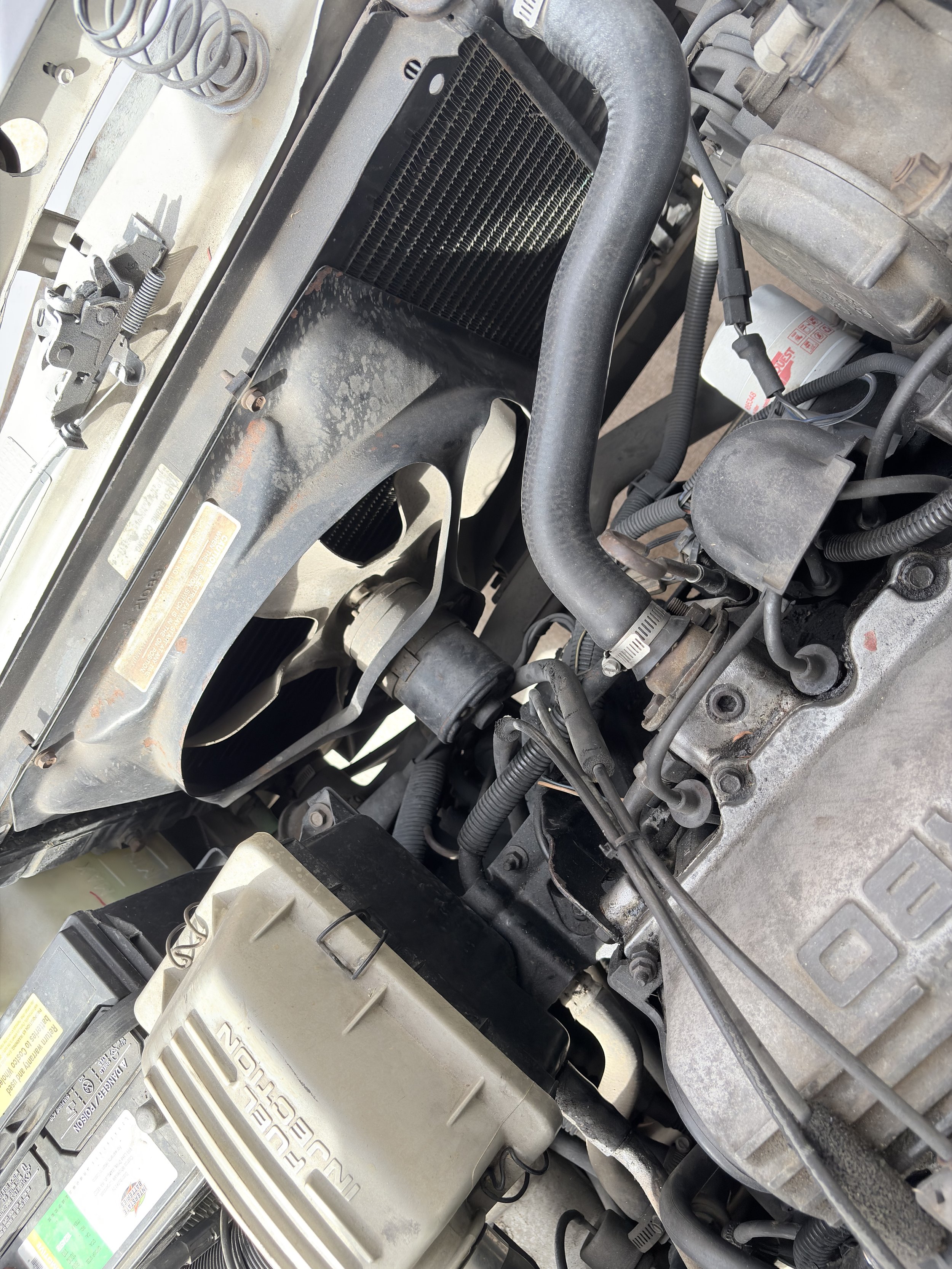
Coolant surged from the open radiator neck during cranking, and plug #1 had clear liquid on its firing tip. Those observations matter most when combined with the overheating and compression results.
Does the coolant surge prove a blown head gasket?
No. Coolant movement by itself is not proof. The 61 PSI reading in the same cylinder as the wet plug makes a head-gasket or cylinder-head leak the leading explanation, but the exact leak path is still unknown.
What should be tested next?
A cold cooling-system pressure test and a leak-down test on cylinder #1. The engine does not need to be run for either test, and the leak-down result can help locate where pressure is escaping.
Can the wagon be driven while this is unresolved?
No. It stays parked. More overheating or coolant entering a cylinder could turn a repairable top-end problem into deeper engine damage.
This is no longer just a thermostat mystery.
I started with the ordinary cooling-system suspects because they were the safest and least terrifying place to begin. After the thermostat replacement did not fix the problem, I pulled the spark plugs and ran a compression test. Cylinder #1 measured 61 psi twice. Cylinders #2, #3, and #4 each measured 140 psi.
What led to the test
What I actually observed
The garage diagnostic laboratory.
From a thermostat to cylinder #1.
I replaced the thermostat.
It was a sensible first step, but the wagon continued to overheat. The easy answer had officially declined the job.
I pulled all four spark plugs.
I kept them in order so the condition of each plug could be matched to its cylinder. All four were very sooty.
Plug #1 was different.
There was clear liquid on its firing tip. The outside ceramic was dry, and the other three plugs were dry.
I tested cylinder #1 twice.
It measured 61 psi with the radiator cap installed and 61 psi again with the cap removed.
The coolant surged.
With the radiator open during the test, coolant came out of the neck like a geyser. That was an observation, not a diagnosis, but it raised the stakes.
The other cylinders were consistent.
Cylinders #2, #3, and #4 each measured 140 psi. That made #1 the clear outlier rather than a generally weak test.
The test narrowed the problem.
The readings confirm a major compression problem in cylinder #1. They do not, by themselves, identify the exact failed part.
Leak-down testing comes next.
When work resumes, a leak-down test should help show whether pressure is escaping through a valve, the piston and rings, or into the cooling system.
How the cooling clues connected to cylinder #1.
Three cylinders had 140 PSI. One had 61.
The video brings together the overheating, wet #1 spark plug, compression readings, coolant surge, and the reason the project is now paused.
See the complete evidence trail
The full diagnosis page separates what the tests confirmed from what is still only likely. It also explains why I am not running the engine again and what has to happen before the repair begins.
One cylinder was nowhere near the others.
Cylinder #1 produced less than half the compression of each of the other three cylinders. The exact factory target is not needed to see the problem here. The large difference between neighboring cylinders is the important part.
| Cylinder | Reading | Test note |
|---|---|---|
| #1 | 61 psi | Same result with radiator cap on and off |
| #2 | 140 psi | Consistent with #3 and #4 |
| #3 | 140 psi | Consistent with #2 and #4 |
| #4 | 140 psi | Consistent with #2 and #3 |
The factory-style compression reference calls for a warm engine, all spark plugs removed, the ignition disabled, and the throttle held wide open. It lists 100 PSI minimum and 25 percent maximum variance. I documented that all four plugs were removed, but I did not document every other condition, so the exact factory comparison is limited. The repeated 61 PSI reading beside three matching 140 PSI readings remains a major outlier.
Cooling-system evidence.
What is confirmed
Cylinder #1 is badly low at 61 psi while the other three cylinders are even at 140 psi. The thermostat replacement did not solve the overheating, and the cooling system behaved abnormally during testing.
What is still unknown
The exact failure is not confirmed. A head-gasket leak, a problem with the cylinder head, a valve issue, or another internal sealing failure still needs to be separated by leak-down testing or teardown when work resumes.
What supports this diagnosis.
The overheating history, failed thermostat fix, plug condition, compression readings, and radiator behavior are firsthand observations from this wagon. Published references provide the test procedure and comparison specifications.
Operation CHARM service-information archive. Used for the warm-engine procedure, all-plugs-removed setup, disabled ignition, wide-open throttle, 100 PSI minimum, and 25 percent maximum variance. View the specification page.
Los Angeles Public Library's Chilton automotive repair database is listed as a supporting service-information resource. Access may require a library card. View the library resource.
The complete test setup, 61 and 140 PSI readings, radiator behavior, and limits of what the test proves. Read the compression-test page.
The evidence trail connecting the cooling symptoms, spark plugs, compression results, likely causes, and paused status. Read the full diagnosis.
The mystery got smaller.
The cooling problem is not fixed, but it is no longer a vague collection of symptoms. Cylinder #1 has a serious compression problem. Now the wagon waits while I make a realistic repair plan.