
The head gasket saga has evidence now.
This started as the diagnosis I was trying not to assume. Then cylinder #1 measured 61 psi while the other three measured 140, and the radiator added a small geyser to the investigation.
Where the head-gasket diagnosis stands.
The evidence is serious enough to keep the wagon parked, but the exact failed part still has to be located.
Is the head gasket blown?
It is the leading explanation, not a confirmed teardown finding. Cylinder #1 has low compression, its plug was wet with clear liquid, the engine overheated, and coolant surged from the radiator neck.
What did the compression test prove?
Cylinder #1 has a serious sealing problem. It measured 61 PSI twice while cylinders #2, #3, and #4 each measured 140 PSI.
What else could cause the low reading?
A valve-sealing problem, piston damage, or worn rings could also lower compression. The head gasket, cylinder head, valves, piston, and rings have not been visually inspected.
Can the wagon still be driven?
No. It has overheated and may have a leak involving the cooling system and cylinder #1. More running could cause deeper engine damage.
What happens before replacing the gasket?
A leak-down test when work resumes. The escape path can point toward the valves, piston and rings, or cooling system. The repair also needs a safe workspace, budget, and a plan with my dad.
One cylinder changed the whole investigation.
The head gasket is not officially convicted. What is confirmed is that cylinder #1 has a major compression problem. The wet spark plug and coolant surge make a head-gasket or cylinder-head problem the leading explanation, but I still need to find the exact leak path before I start taking the engine apart.
The tests changed the whole plan.
This video brings the symptoms, spark-plug evidence, compression readings, and coolant behavior together. It also explains why the wagon is parked while I plan the next test and figure out whether my dad and I can tackle the repair together.
What I observed
What the tests established
61, 140, 140, 140.
I expected the test to narrow the list of possibilities. I did not expect it to point this dramatically at one cylinder. You can see the full setup and results on the 2.2 Turbo compression-test page.
| Cylinder | Compression | What it tells me |
|---|---|---|
| #1 | 61 psi | Major loss compared with the other cylinders |
| #2 | 140 psi | Matches cylinders #3 and #4 |
| #3 | 140 psi | Matches cylinders #2 and #4 |
| #4 | 140 psi | Matches cylinders #2 and #3 |
The factory-style reference calls for a warm engine, all spark plugs removed, the ignition disabled, and the throttle held wide open. It lists 100 PSI minimum and 25 percent maximum variance. I documented that all four plugs were removed, but I did not document every other condition, so the exact factory comparison is limited. The repeated 61 PSI reading beside three matching 140 PSI readings remains a major outlier.
Confirmed, likely, and still unknown.
Cylinder #1 has a major compression problem.
A repeated 61 psi reading beside three matching 140 psi readings is not a small variation. Cylinder #1 is not sealing normally.
The head gasket or cylinder head is involved.
The low cylinder, wet firing tip, overheating, and radiator-neck surge make a leak between cylinder #1 and the cooling system a serious possibility.
The exact failed part.
The evidence does not yet separate a failed head gasket from a warped or cracked cylinder head. A valve-sealing problem or piston and ring damage also cannot be ruled out from compression numbers alone.
From theory to an actual test result.
The overheating continued.
The thermostat replacement was completed, but the wagon still overheated and had drivability problems. That meant the thermostat was not the whole story.
I pulled all four spark plugs.
They were all very sooty. Plug #1 also had clear liquid on its firing tip, which gave me a specific cylinder to watch.
I tested compression.
Cylinder #1 produced 61 psi twice. Cylinders #2, #3, and #4 each produced 140 psi.
The radiator joined the conversation.
During testing with the cap removed, fluid surged out of the radiator neck. That is another clue, but it is not proof of a failed head gasket by itself.
I stopped before making it worse.
The wagon is not being driven while the overheating, coolant loss, and low compression remain unresolved.
Find where the pressure goes.
Before any teardown
If the head comes off
That will become its own carefully documented job. The cylinder head and gasket will need to be inspected, and the head may need professional checking for warpage or cracks before anything goes back together.
I am not buying a pile of parts or writing a victory speech yet. First, the diagnosis has to earn the teardown.
The area under investigation.
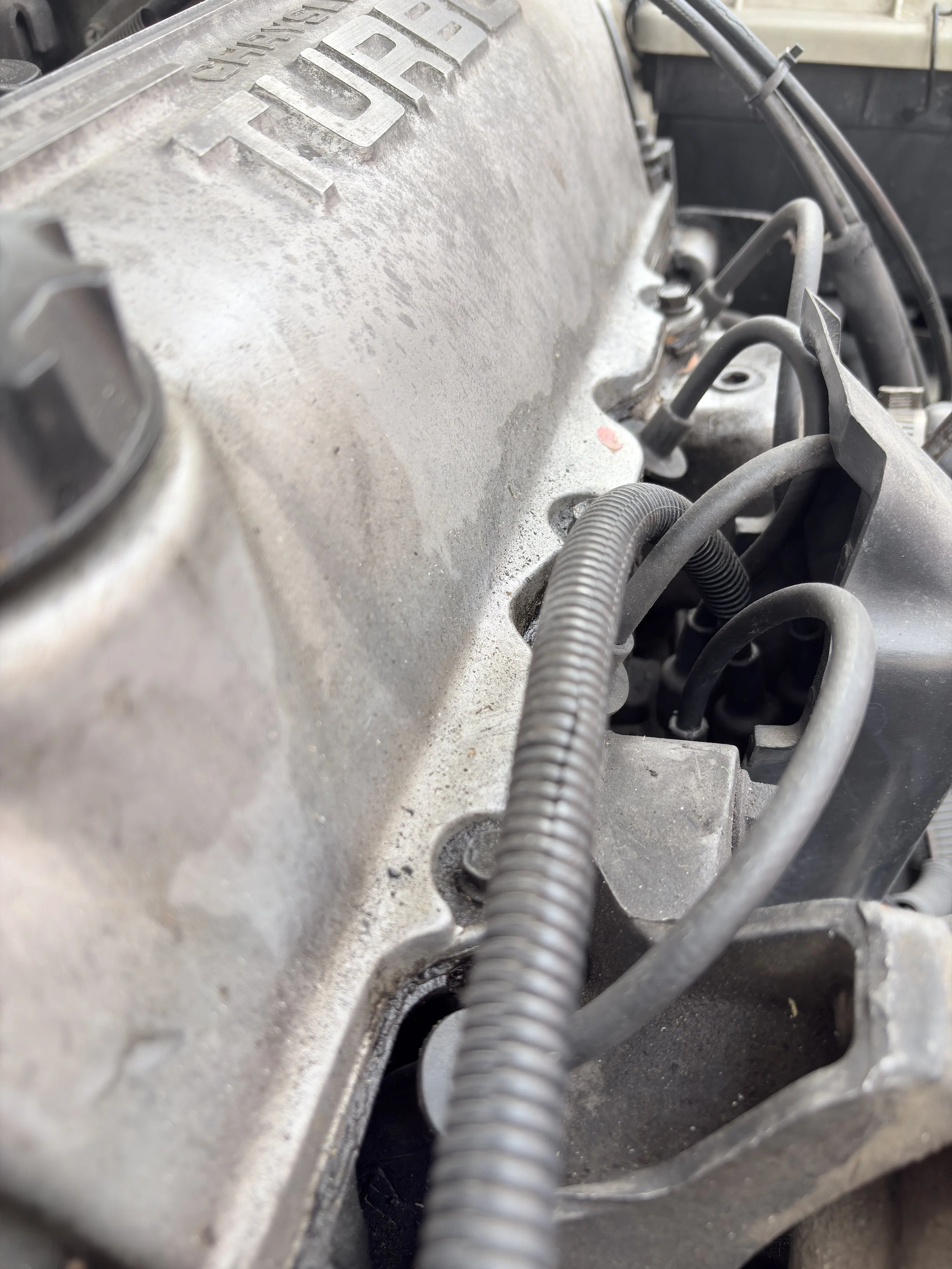
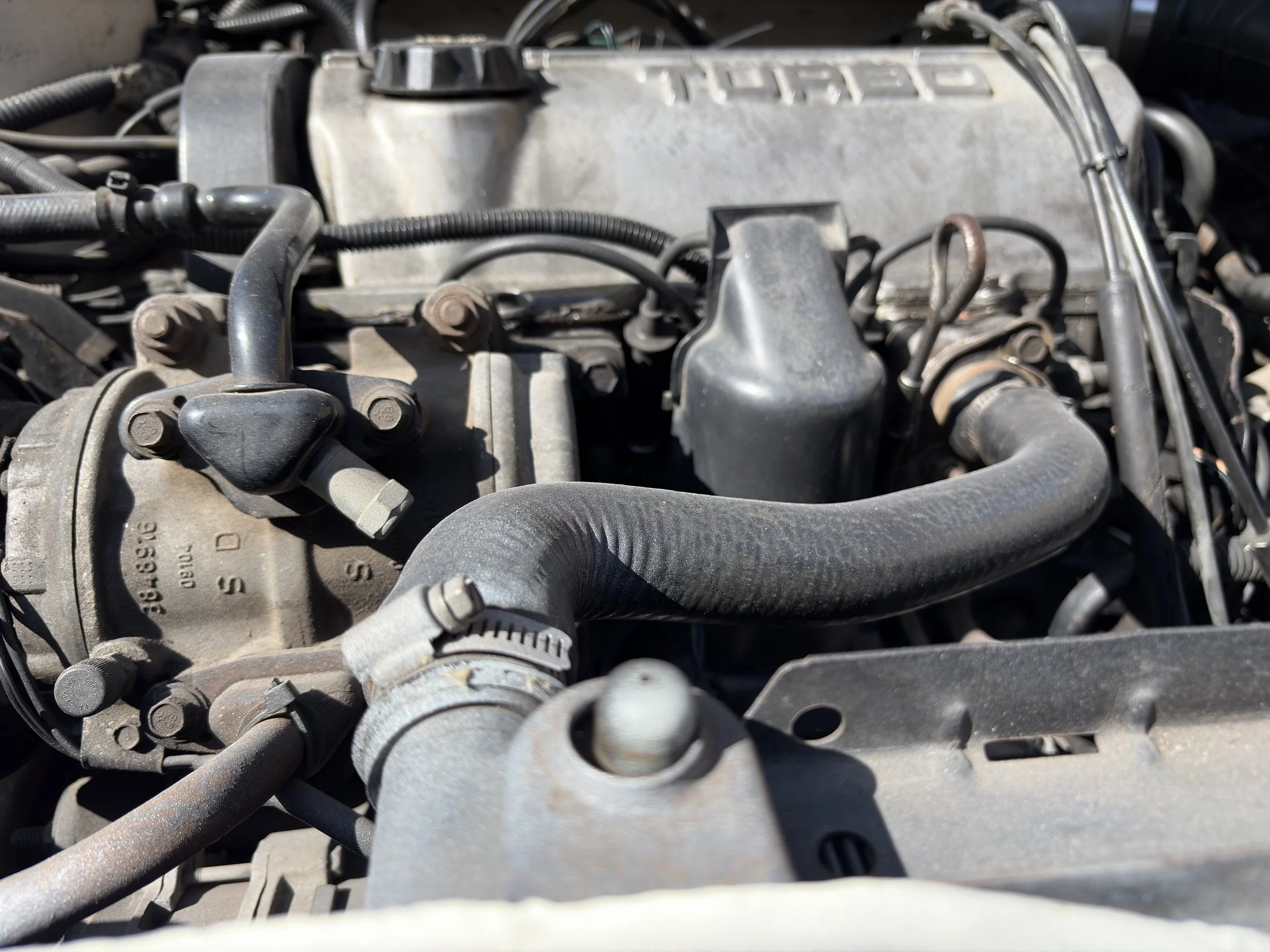
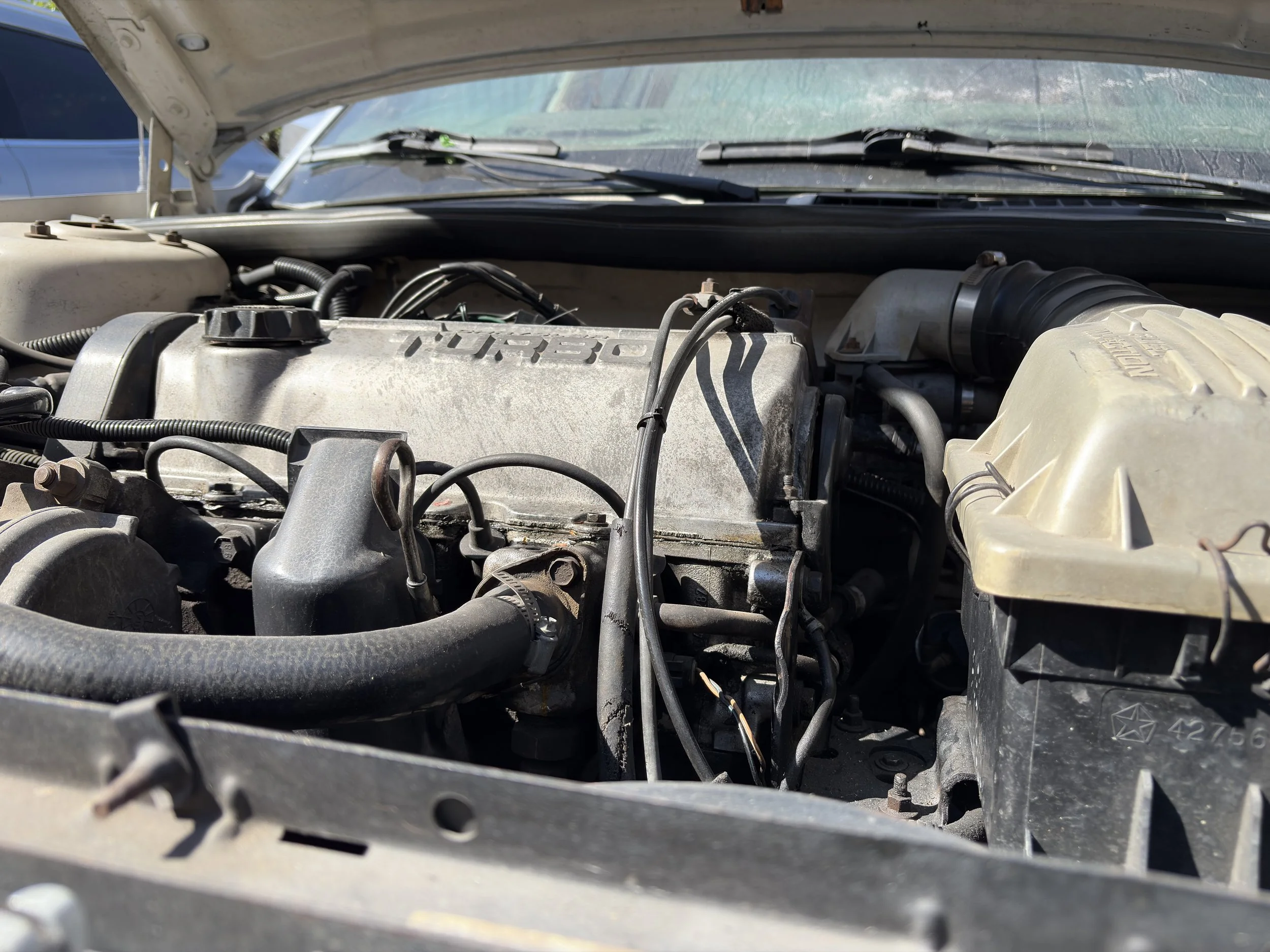
Biggest lesson so far
The boring diagnostic steps did exactly what they were supposed to do. They did not finish the repair, but they turned a cloud of possible problems into one very specific cylinder.
Where it stands
This is not a completed head-gasket repair. The wagon is parked while I plan the leak-down test, talk through the repair with my dad, and work out what I can realistically afford. It is paused, not abandoned.
What supports this page.
The symptoms, plug condition, compression readings, and radiator behavior are firsthand observations from this wagon. Published references provide the compression procedure and comparison specifications.
Operation CHARM service-information archive. Used for the warm-engine procedure, all-plugs-removed setup, disabled ignition, wide-open throttle, 100 PSI minimum, and 25 percent maximum variance. View the specification page.
Los Angeles Public Library's Chilton automotive repair database is listed as a supporting service-information resource. Access may require a library card. View the library resource.
The full test setup, 61 and 140 PSI readings, radiator behavior, and limits of what the test proves. Read the compression-test page.
The complete evidence trail connecting the symptoms, spark plugs, cooling system, compression results, likely causes, and paused status. Read the full diagnosis.
The saga is no longer theoretical.
Follow the evidence from the spark plugs through the cooling-system diagnosis and the compression test.