
Mystery goo diagnosis.
Unexplained spots under the wagon started a driveway investigation. I have evidence of a leak, but I do not yet have enough evidence to name the fluid or its source.
What the driveway evidence does and does not prove.
What did I find?
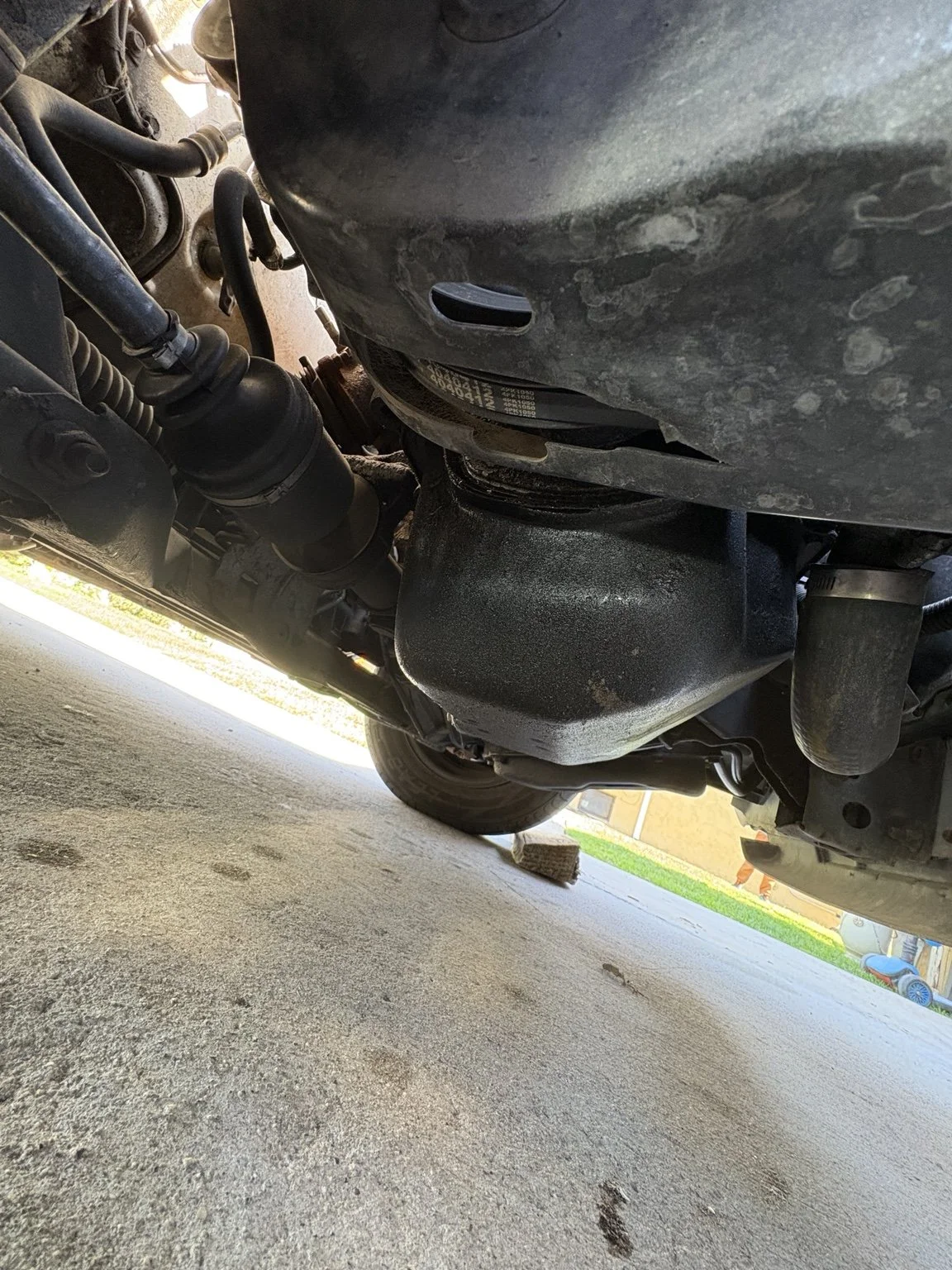
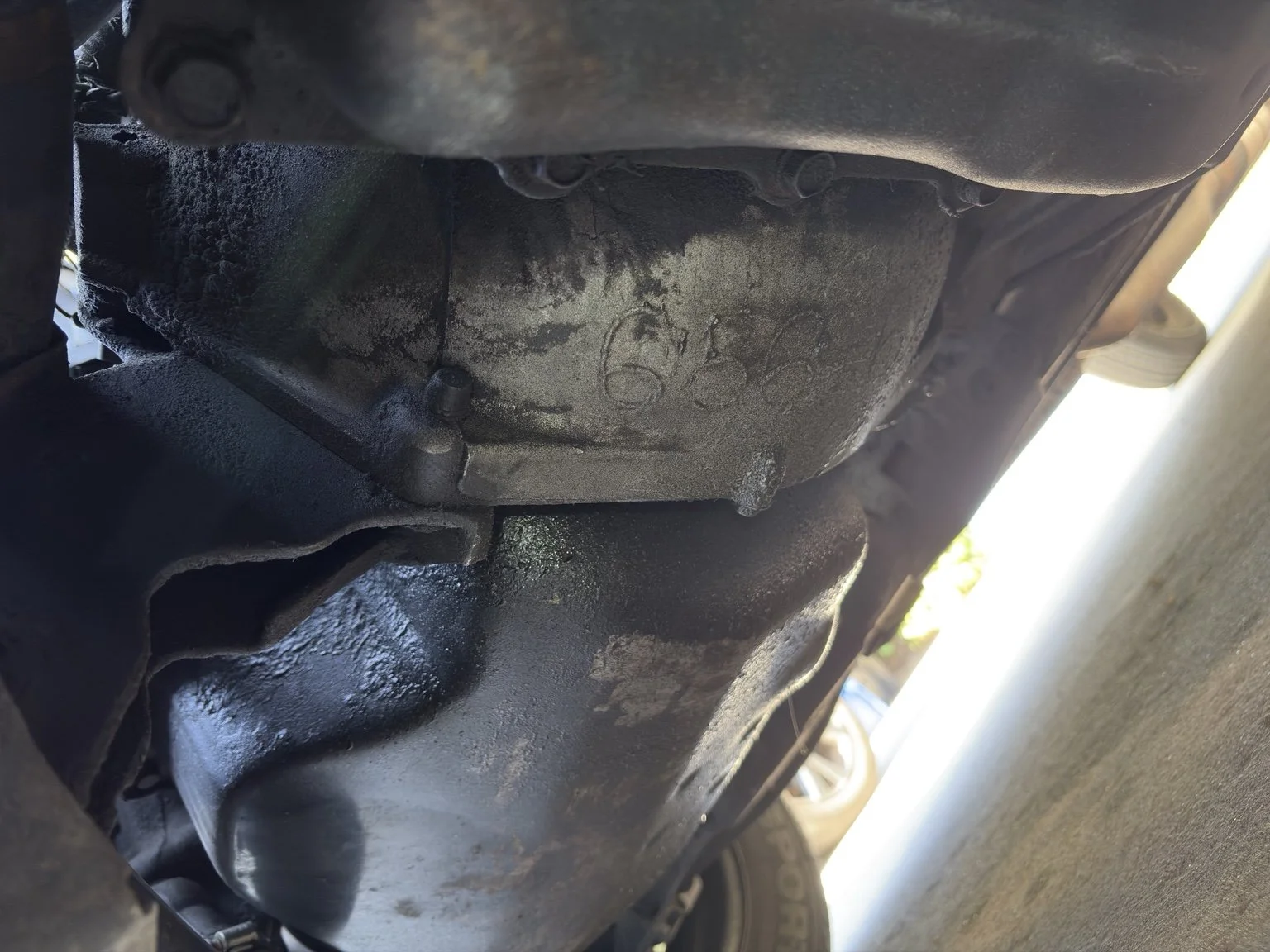
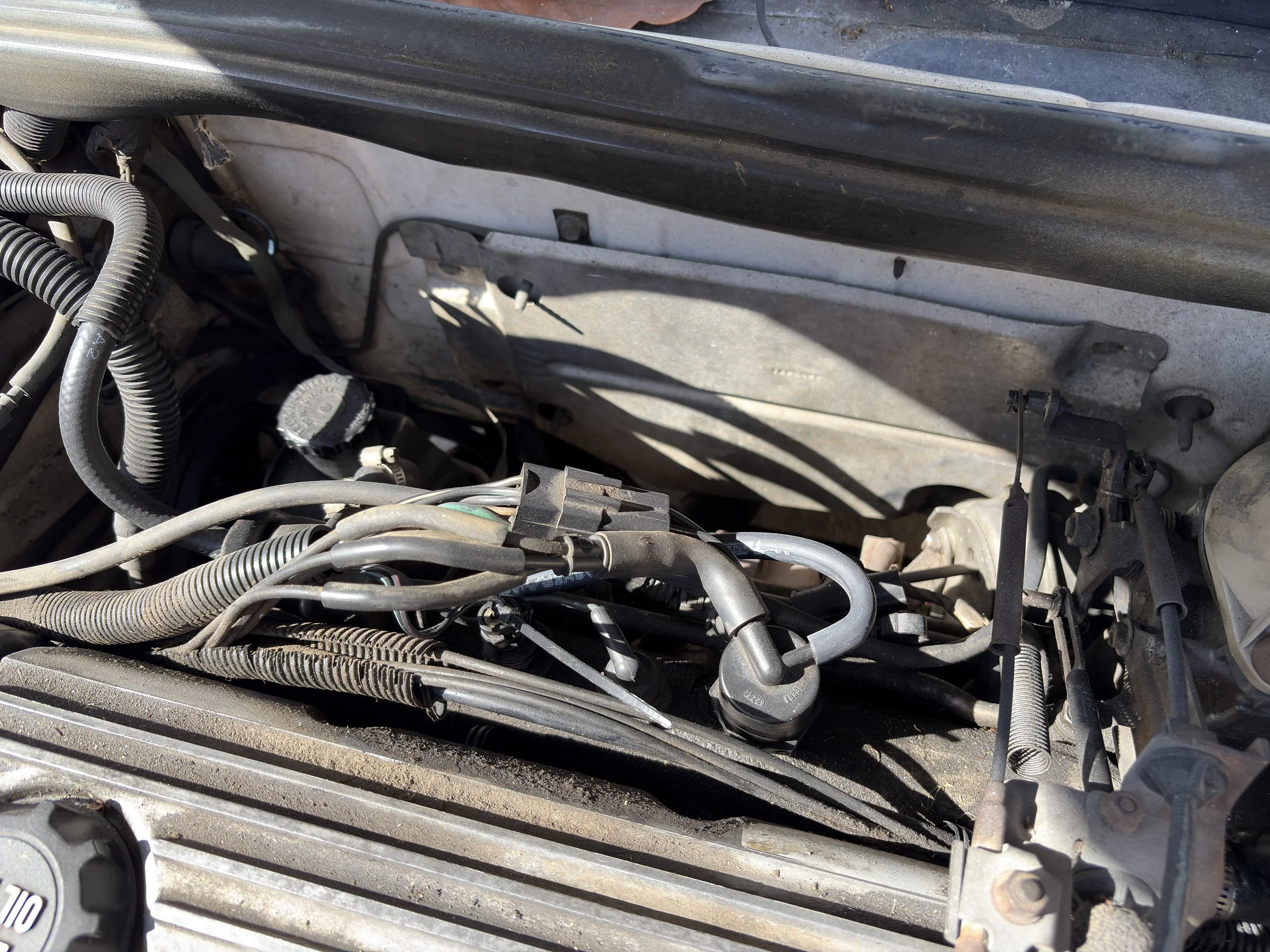
I found visible spots and damp-looking residue beneath the wagon after it sat. The photos preserve the location and appearance of that evidence.
What fluid is leaking?
I have not confirmed it. Oil, coolant, transmission fluid, power-steering fluid, and plain water have different clues, but appearance alone is not enough here.
Where is it coming from?
The exact component or seal has not been traced. A spot on the ground can be displaced from its source by airflow, splash, or a fluid running along another surface.
Does this prove the head gasket failed?
No. The wagon has serious engine-test results documented elsewhere, but these driveway spots do not independently identify a head-gasket leak.
Should the engine be run to find the leak?
Not right now. Because cylinder 1 measured 61 PSI while cylinders 2 through 4 measured 140 PSI, I am keeping the engine off until the larger engine problem is addressed.
The leak is real. The label is not.
The useful part of this page is the evidence boundary. I can document where residue appeared and compare its color, smell, texture, and location with known fluid characteristics. I cannot responsibly call it oil, coolant, or anything else until I trace fresh fluid back to a source.
What I actually have
What can narrow it down
How I can gather evidence without running it.
Check every fluid level cold.
Record engine oil, coolant-recovery bottle, transmission fluid only when the correct service procedure is possible, power-steering fluid, and brake fluid. A changing level is stronger evidence than a guess based on color.
Use clean cardboard.
Place clean cardboard beneath the wagon and mark its orientation. This makes the location, color, and spread of any new drip easier to compare.
Inspect from above with the engine cold.
Look around the valve cover, oil filter area, cooling-system connections, power-steering components, and visible transmission surfaces without reaching near hot or moving parts.
Trace upward from fresh residue.
Fluid usually moves downward, but it can run along seams and brackets. Follow the wettest fresh path upward instead of assuming the spot directly above the cardboard is the source.
Clean only the area being tracked.
A carefully cleaned section can reveal fresh seepage later. Photograph the area before cleaning so the original evidence is not lost.
Wait for the engine repair plan.
Any test that requires running the engine can wait until the low-compression problem is addressed and it is safe to continue diagnosis.
What was visible under the wagon.
The engine diagnosis changed the plan
The later compression test found 61 PSI on cylinder 1 and 140 PSI on cylinders 2 through 4. Coolant also surged from the open radiator neck during testing. Those findings are serious, but they should not be retroactively used to label every driveway spot. Read the low-compression engine diagnosis for the actual test evidence.
What would close this case
A confirmed fluid sample, a repeatable drop in the corresponding reservoir or sump, and a fresh wet path traced to a component would turn this from mystery goo into a real repair target.
What supports this page.
The three photos above document the visible spotting and residue that started this investigation.
Los Angeles Public Library Chilton access is the service-information starting point for fluid specifications, component locations, and inspection procedures.
The engine-diagnosis page records the later compression readings and cooling-system behavior separately from this unidentified external residue.
The cooling-system overhaul provides related project history without claiming it caused the spots shown here.
The BWG repair archive places this open investigation within the wagon's larger repair history.
The goo still owes me an explanation.
For now, the honest result is an open case. I have photos, a safer inspection plan, and enough restraint not to diagnose a forty-year-old wagon by driveway stain alone.