
One wet spark plug changed the diagnosis.
I pulled all four plugs from the 1985 Chrysler 2.2 Turbo expecting useful clues. Cylinder #1 gave me a much bigger clue than I wanted.
What the spark plugs told me.
What did the four spark plugs look like?
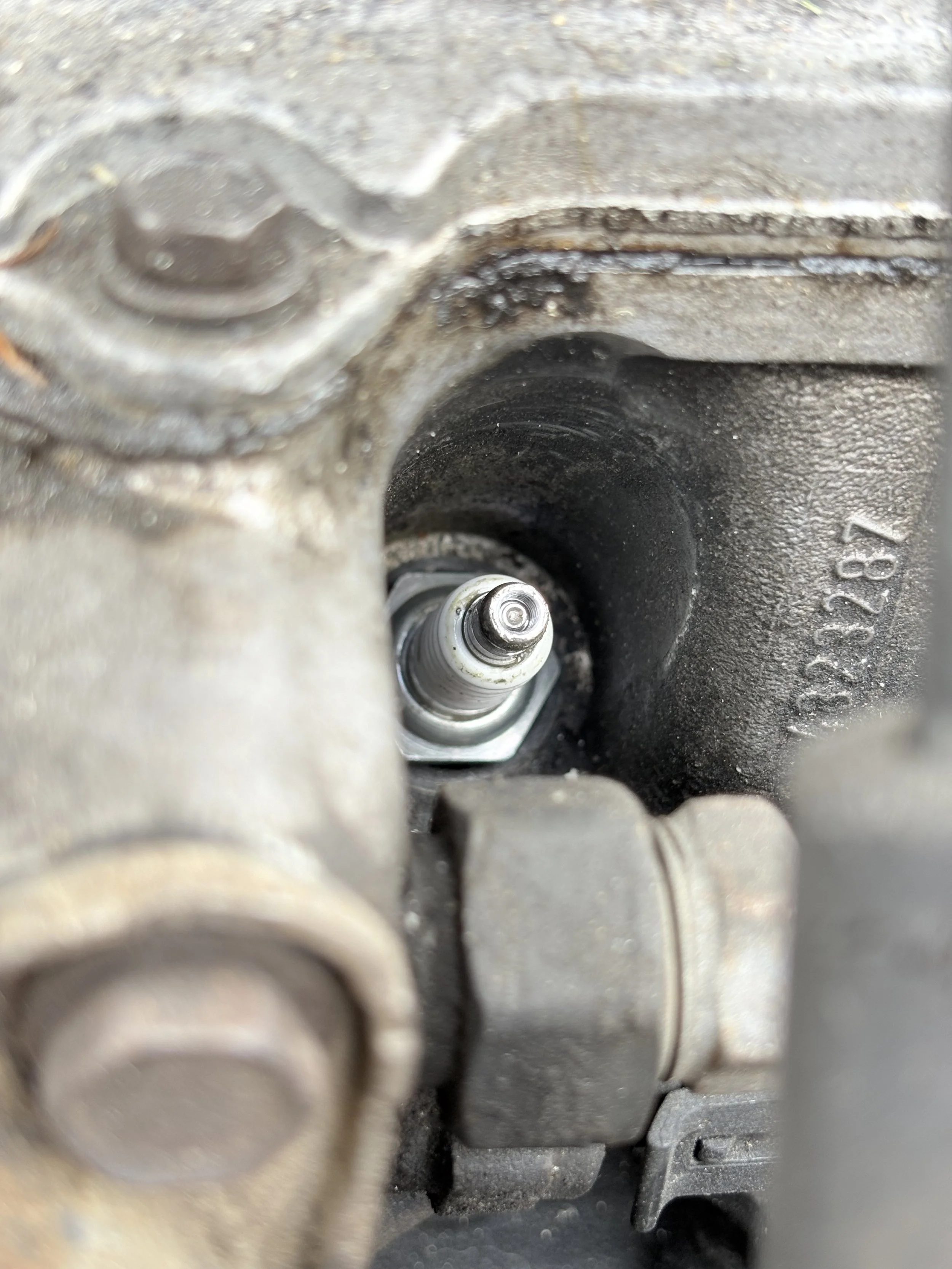
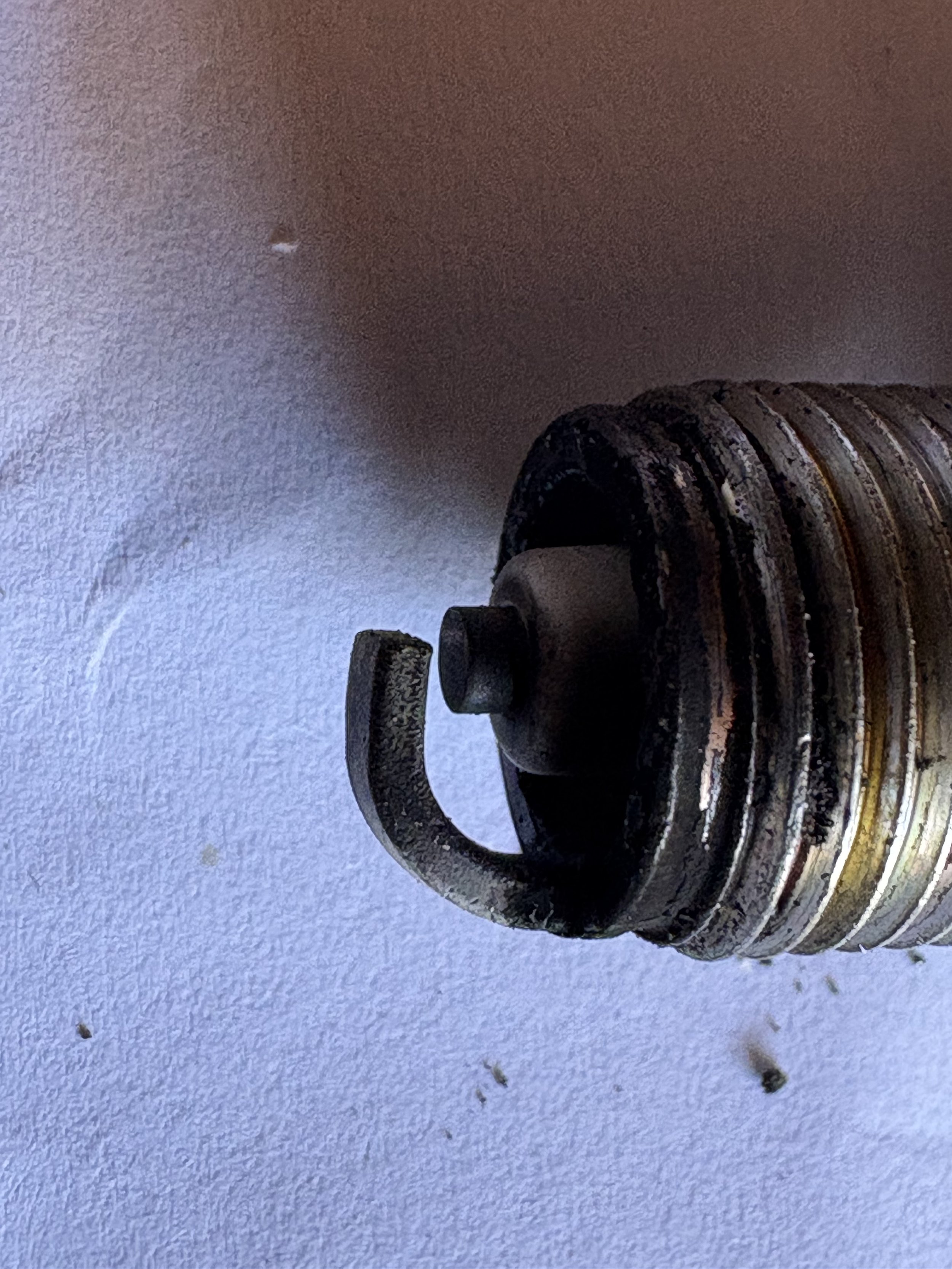
Plugs #2, #3, and #4 were dry, dark, and heavily sooted. Plug #1 was also sooty, but it had clear liquid on its firing tip while the outside ceramic stayed dry.
What can black, sooty spark plugs mean?
Heavy dark deposits can fit rich running, incomplete combustion, low compression, ignition trouble, or the wrong plug heat range. The plug appearance alone cannot identify the cause.
Did the wet #1 plug prove a blown head gasket?
No. A wet firing tip can fit more than one problem. It made cylinder #1 the priority for follow-up testing, but it did not identify the failed part by itself.
What did the compression test show?
Cylinder #1 repeatedly measured 61 PSI. Cylinders #2, #3, and #4 each measured 140 PSI, confirming a serious compression or sealing problem in #1.
Can the wagon be run or driven now?
No. With overheating, coolant surge, a wet #1 plug, and 61 PSI in that cylinder, the engine will stay off until the leak path and repair plan are known.
The plugs stopped being theoretical.
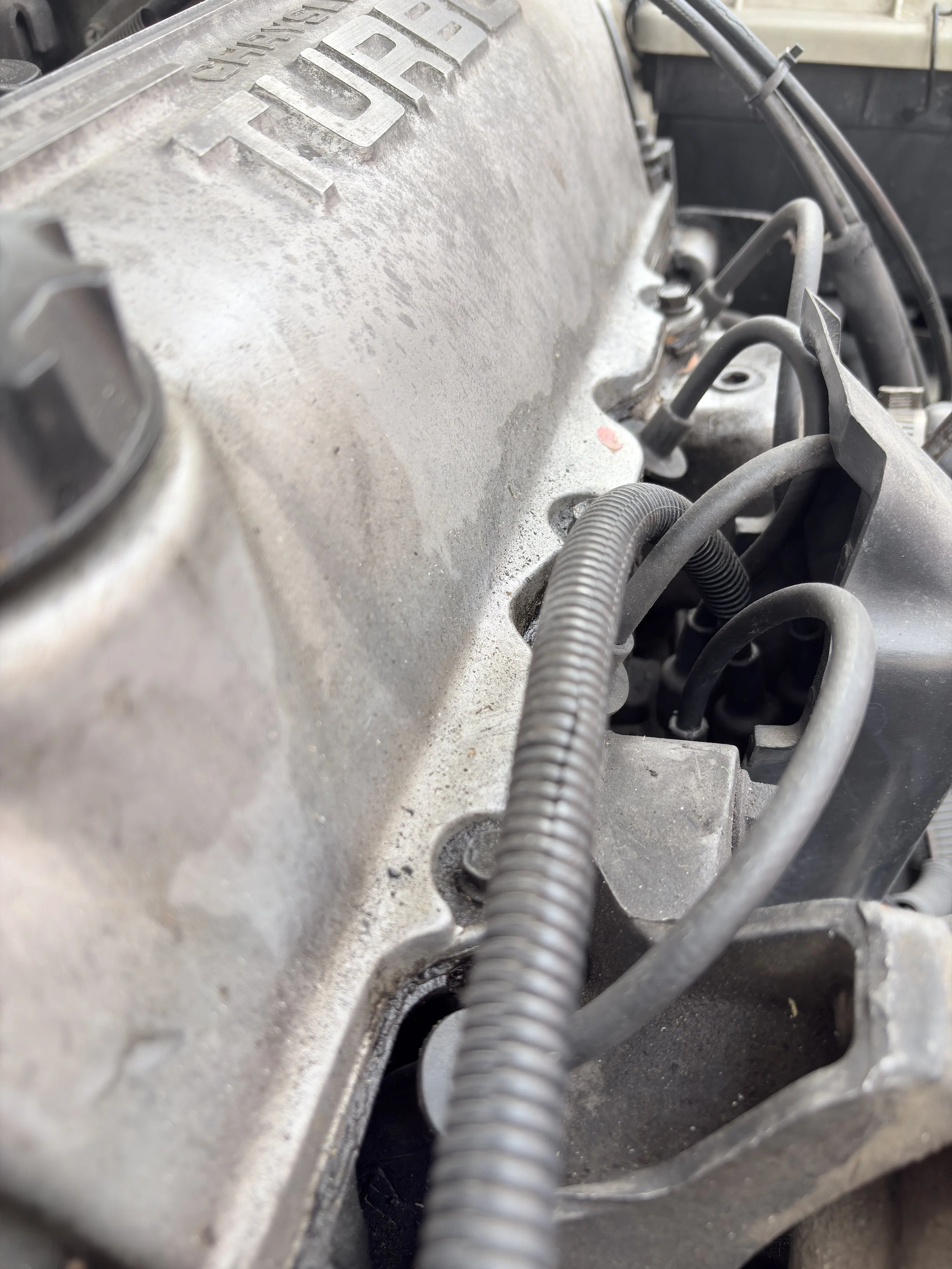
The wagon had become hard to start, stalled when hot and at stops, smoked, and overheated. I pulled the spark plugs so I could compare the four cylinders instead of continuing to build an increasingly elaborate collection of guesses.
Why I pulled them
What came out
The plug was the first clue. The tests told the rest.
Three cylinders had 140 PSI. One had 61.
See the complete evidence trail
The full diagnosis page connects the wet #1 plug to the compression readings, coolant surge, likely causes, and what still has not been proven.
The engine will not be run again. The project is paused while I look for work, talk through the job with my dad, and make a realistic plan for the tools, workspace, machine-shop work, and cost.
Pull, label, compare, then test.
I started with a cool engine.
I removed each plug carefully and kept it tied to its cylinder number. Mixing them up would have turned useful evidence into four anonymous little mysteries.
I compared all four plugs.
Every plug was heavily sooted. That can fit rich running or incomplete combustion, but the plugs alone cannot identify why it happened.
Plug #1 came out wet.
Clear liquid was on the firing end while the outside ceramic stayed dry. That made cylinder #1 the obvious place to investigate next.
I followed the clue with a compression test.
Cylinder #1 repeatedly measured 61 psi. Cylinders #2, #3, and #4 each measured 140 psi.
The cooling system joined the conversation.
Coolant surged from the open radiator neck like a geyser during testing. That is important evidence, but it does not identify the exact failed part by itself.
Two clues, in the order I found them.
Pulling the spark plugs
Water in cylinder #1?
The compression results.
The plug inspection pointed toward cylinder #1. The compression test showed how different that cylinder really was.
| Cylinder | Compression | What it showed |
|---|---|---|
| #1 | 61 psi | Repeatedly far below the other three cylinders |
| #2 | 140 psi | Matched cylinders #3 and #4 |
| #3 | 140 psi | Matched cylinders #2 and #4 |
| #4 | 140 psi | Matched cylinders #2 and #3 |
What is confirmed
All four plugs were very dark and sooty.
Clear liquid was on the firing tip of plug #1.
Cylinder #1 repeatedly produced only 61 PSI.
The other three cylinders each produced 140 PSI.
What is not confirmed
The exact path where cylinder #1 is losing pressure.
Head gasket, cylinder head, valves, rings, or a combination.
Whether the cylinder head is warped or cracked.
The exact repair plan, until leak-down testing or teardown identifies the failure.
The evidence before anything was cleaned.
What supports this diagnosis.
The labels below separate outside technical guidance from what I observed and measured on this specific wagon.
NGK explains that heavy black wet or dry deposits can fit several conditions, including rich running and low compression, and that a wet firing tip can have more than one cause. Read the NGK guide.
The Operation CHARM service-information archive lists the factory-style test conditions, 100 PSI minimum, and 25 percent maximum variance. View the specification page.
The complete test record documents the repeated 61 PSI result in cylinder #1, the three 140 PSI readings, coolant behavior, and the test's limits. Read the compression-test page.
The full diagnosis connects the plug appearance, compression results, overheating, coolant surge, leading possibilities, and what still needs testing. Read the complete diagnosis.
Follow the diagnosis.
The plugs found the problem cylinder.
They did not identify the failed part by themselves, but they pointed directly to cylinder #1. Now the wagon waits while I make a realistic repair plan.