
Three cylinders had 140 PSI. One had 61.
The compression test finally gave me a clear answer about one thing: cylinder #1 has a serious sealing problem. It also made the wagon's next chapter much bigger than another driveway afternoon.
What low compression in one cylinder means.
The test found a serious mechanical problem in cylinder #1. It narrowed the diagnosis, but it did not identify the failed part by itself.
What does low compression in one cylinder mean?
That cylinder cannot seal pressure like the others. Cylinder #1 measured 61 PSI twice while cylinders #2, #3, and #4 each measured 140 PSI.
Does 61 PSI prove a blown head gasket?
No. The wet #1 plug, overheating, coolant surge, and low compression make a head-gasket or cylinder-head problem the leading explanation. A valve, piston, or rings could also cause the pressure loss.
How low is 61 PSI?
It is below the factory-style reference minimum of 100 PSI. That source specifies a warm engine, all plugs removed, ignition disabled, and wide-open throttle. Not every condition from this BWG test was documented, but 61 beside three matching 140 readings remains a major outlier.
Can I keep driving it?
No. The wagon has overheated and may be moving coolant into or near cylinder #1. It stays parked to avoid turning a repairable top-end problem into deeper engine damage.
What test comes next?
A cylinder leak-down test when work resumes. Escaping air at the intake, exhaust, crankcase, or cooling system can help locate the leak before teardown.
The test found the problem cylinder.
The wagon had become hard to start, cut out under acceleration, stalled, struggled to idle when hot, and overheated. Replacing the thermostat did not solve it. When I pulled the plugs, cylinder #1 had clear liquid on the firing tip. Then the compression test found 61 PSI in that cylinder while the other three each produced 140 PSI.
What 61 PSI actually tells me.
The video walks through every clue, what the compression readings prove, what they do not prove, and why I am not running the engine again while I make a repair plan.
The symptoms stopped looking separate.
Hard starting and key cycling
The wagon became difficult to start. Cycling the key two or three times seemed to help, which originally made the fuel system look suspicious.
Cutout, stalling, and hot-idle trouble
It cut out once under acceleration, later stalled while driving, and did not want to stay running at a stop after it was hot.
Overheating and coolant loss
The engine overheated and pushed coolant out near the radiator. I replaced the thermostat, but the larger problem remained.
The spark plugs narrowed the search
Plugs #2, #3, and #4 were very black and sooty. Plug #1 had clear liquid on its firing tip, giving me one cylinder to investigate first.
The compression test made it measurable
Cylinder #1 produced 61 PSI twice. Cylinders #2, #3, and #4 each produced 140 PSI.
The spark-plug clue
All four plugs were dark and sooty, but the firing end of plug #1 was wet with clear liquid. The outside ceramic was dry.
That did not prove coolant or a failed head gasket by itself. It did tell me that cylinder #1 deserved a closer look.
The coolant clue
During the compression testing, coolant came forcefully out of the open radiator neck.
Coolant movement during cranking is another clue, not a diagnosis by itself. Combined with overheating, the wet #1 plug, and the low reading in that same cylinder, it raises concern about a leak between the cylinder and cooling system.
61, 140, 140, 140.
The useful comparison is not one perfect compression number. It is how close the cylinders are to each other. Three matching readings make the 61 PSI result in cylinder #1 impossible to shrug off.
| Cylinder | Compression | What I observed |
|---|---|---|
| #1 | 61 PSI | Repeated with the radiator cap on and off |
| #2 | 140 PSI | Matched cylinders #3 and #4 |
| #3 | 140 PSI | Matched cylinders #2 and #4 |
| #4 | 140 PSI | Matched cylinders #2 and #3 |
The factory-style reference calls for a warm engine, all spark plugs removed, the ignition disabled, and the throttle held wide open. It lists 100 PSI minimum and 25 percent maximum variance. I documented that all four plugs were removed, but I did not document every other condition, so the exact factory comparison is limited. The repeated 61 PSI reading beside three matching 140 PSI readings remains a major outlier.
Confirmed, likely, and still unknown.
Cylinder #1 is not sealing properly.
A repeated 61 PSI reading beside three matching 140 PSI readings confirms a serious mechanical sealing problem in that cylinder.
The head gasket or cylinder head may be involved.
The low compression, liquid on plug #1, overheating, and abnormal coolant movement fit a leak near the head gasket or cylinder head better than any one clue does alone.
The exact path of the leak.
A valve problem, damaged piston, or worn rings can also cause low compression. The head has not been removed, and no teardown has confirmed the failed part.
This is bigger than a solo driveway job.
I still want to do as much of the repair myself as I realistically can. After talking with my dad, I also had to admit that I do not have all of the experience, tools, workspace, or extra hands needed to remove and reinstall a turbo cylinder head alone in my driveway.
Make A Plan With My Dad
We need to decide whether this is a repair we can tackle together and where the work could happen safely.
Understand The Cost
If the head comes off, it should be checked for cracks and flatness. Gaskets, machine work, parts, and discoveries during teardown can add up quickly.
Put Cosmetics On Hold
Paint, trim, interior, and other projects can wait until I know what it will take to make the engine mechanically sound.
Find where the pressure is escaping.
Next Diagnostic Step
A cylinder leak-down test puts compressed air into cylinder #1 and helps locate the escape path. Air at the intake points toward an intake valve. Air at the exhaust points toward an exhaust valve. Air in the crankcase points toward the piston or rings. Bubbles in the cooling system would support a head-gasket or cylinder-head leak.
If The Head Comes Off
The cylinder head and gasket will need careful inspection. The head should be professionally checked for cracks and flatness before I assume it can be reused. The parts list and repair budget come after that evidence, not before it.
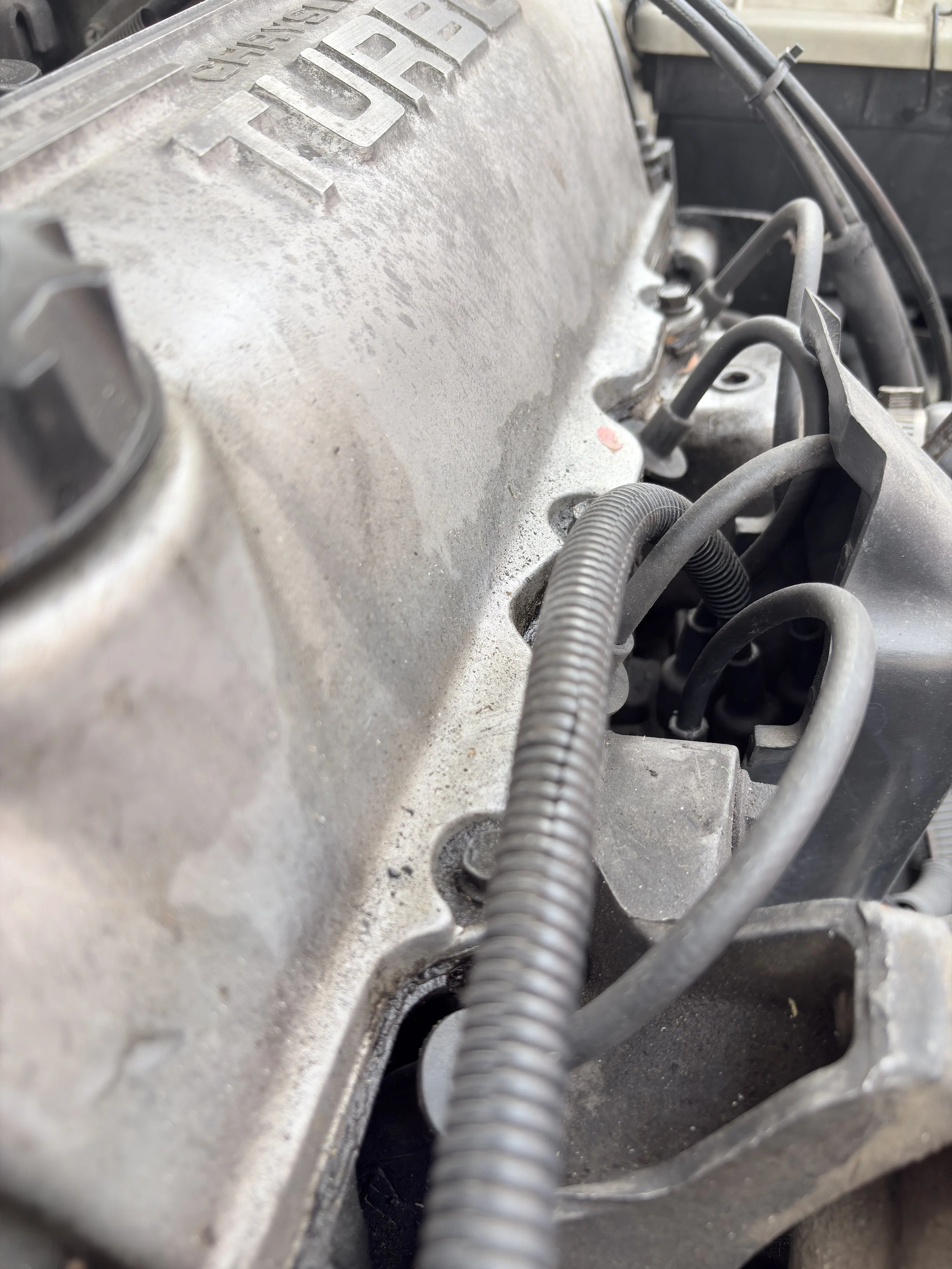
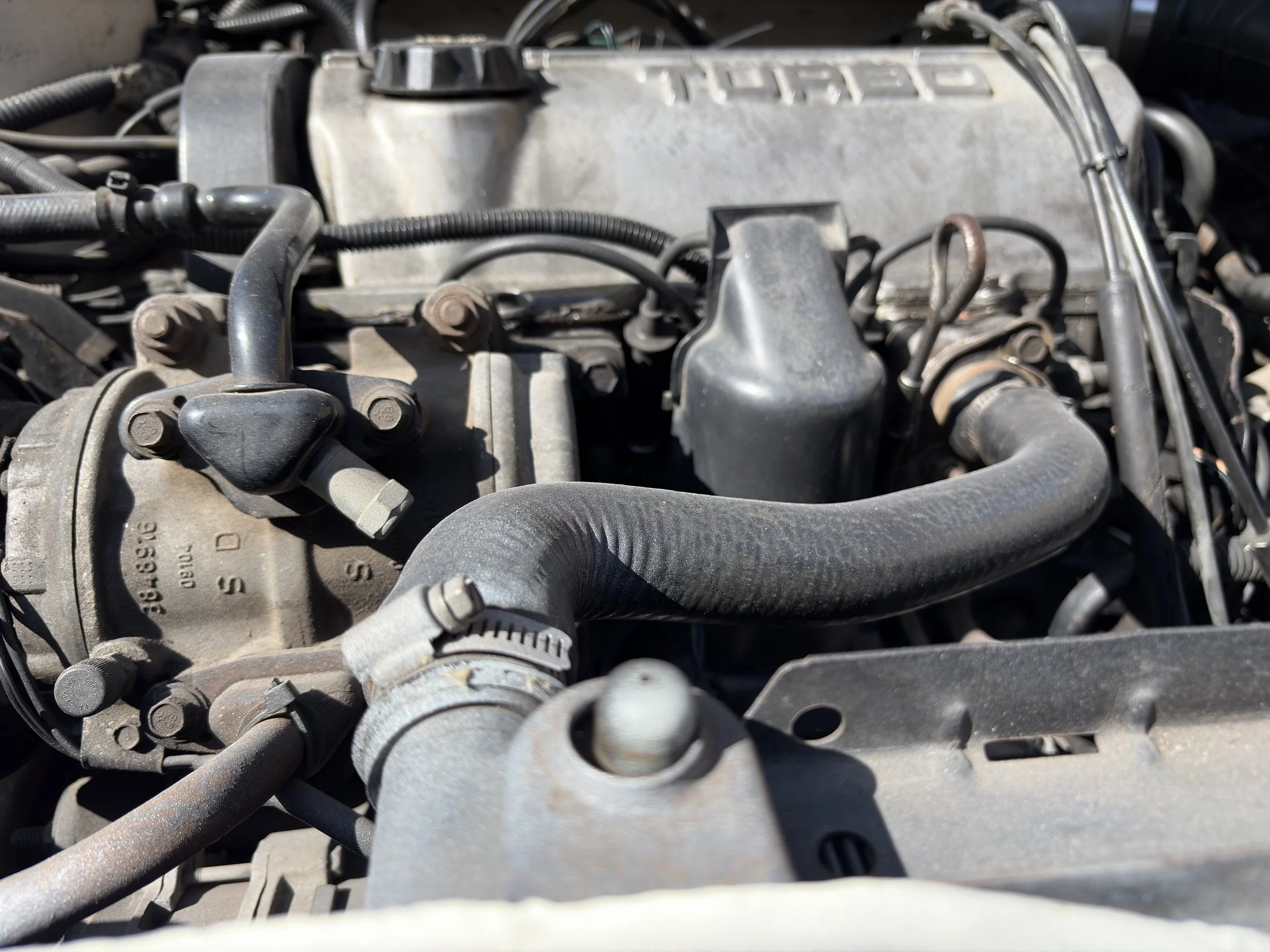
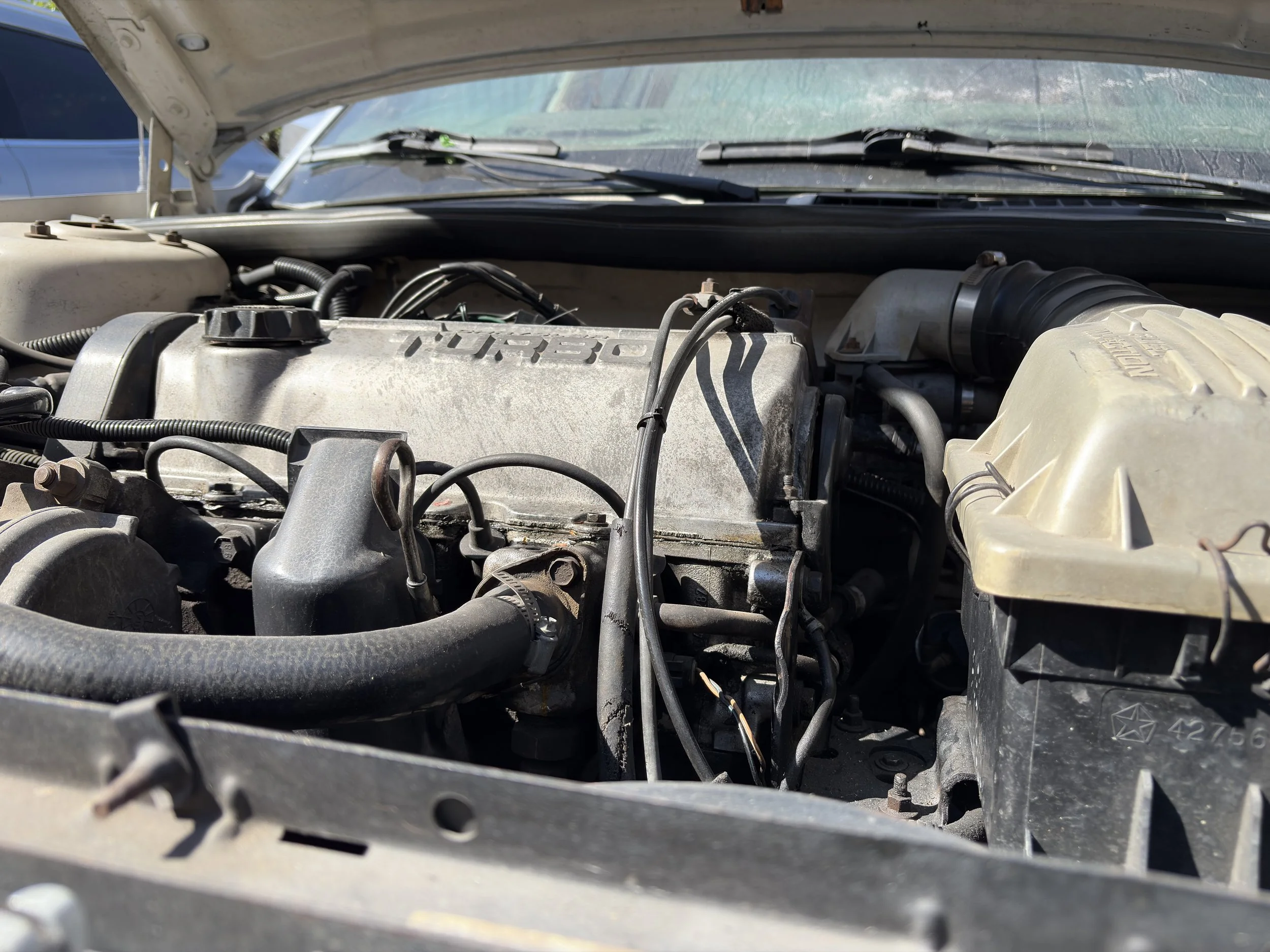
The 2.2 Turbo is staying quiet for now.
What supports this diagnosis.
The compression readings, plug condition, overheating history, and radiator behavior are firsthand observations from this wagon. Published references supply the compression procedure and comparison specifications.
Operation CHARM service-information archive. Used for the warm-engine procedure, all-plugs-removed setup, disabled ignition, wide-open throttle, 100 PSI minimum, and 25 percent maximum variance. View the specification page.
Los Angeles Public Library's Chilton automotive repair database is listed as a supporting service-information resource. Access may require a library card. View the library resource.
The complete test setup, 61 and 140 PSI readings, radiator behavior, and limits of what the test proves. Read the compression-test page.
The current project update connects the symptoms, spark-plug evidence, cooling-system behavior, test results, and paused status. Watch the video.
The wagon is waiting. I am not done.
The compression test ended the guessing, but it did not finish the diagnosis. Follow the individual tests and the ongoing head-gasket investigation.