Buyer's Guide
Should you actually buy a 1985 Chrysler Town & Country wagon?
Everything I wish I'd known before this wagon came back into my life — the honest version, not the brochure version.
The Backstory
Before the rust and the vacuum lines, some context.
If you're here weighing whether to buy a 1985 Chrysler Town & Country wagon, I hope this actually helps.
But before we get into rust, vacuum lines, and everything else I'd check before buying one, I should explain why this particular wagon means more to me than most.
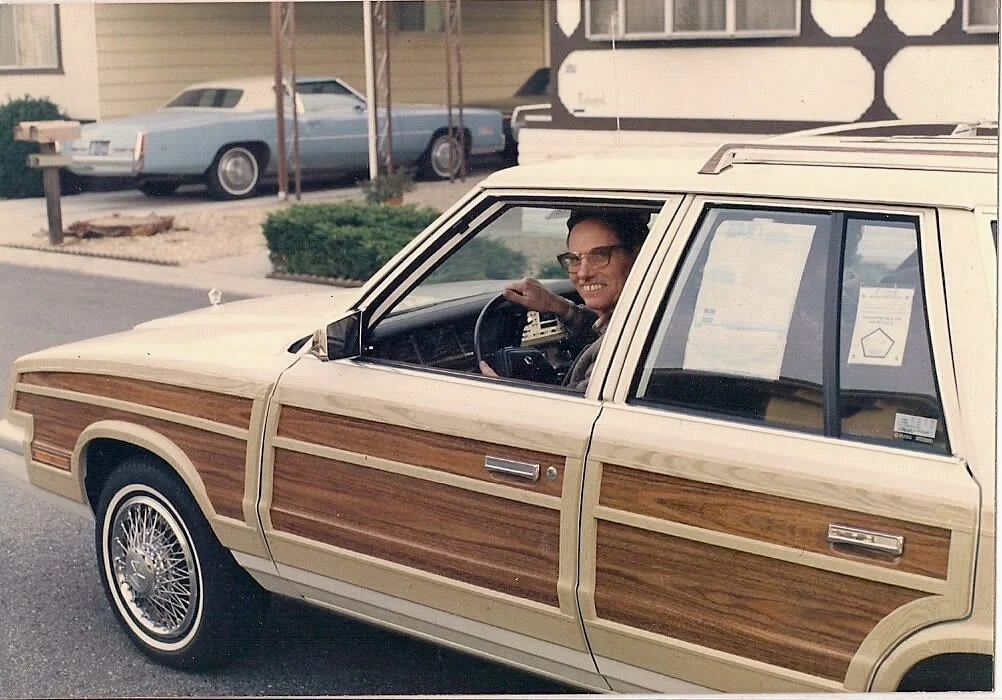
When I was sixteen, my grandparents gave me a 1985 Chrysler Town & Country. It was my first car, and it earned some of my favorite memories.
That wagon was eventually stolen. I figured I'd never own another one.
Years later I made an offhand joke that if I ever had a few thousand dollars to spare, I'd buy another 1985 Town & Country just for the nostalgia.
My friends remembered. One day, they surprised me with this wagon.
I was already overwhelmed by that gift. Then I learned something that made it feel almost impossible. The wagon's previous owner had been a woman named Norma.
That was my grandmother's name.
I don't believe everything happens for a reason, but every now and then life hands you a coincidence too meaningful to ignore.
So every repair since has felt like more than another item on a to-do list. It's time with the friends who made this possible. It's a nod to my grandparents and the car that started all of this. It's hours in the garage with my kid, who's become my favorite (and most opinionated) supervisor. And it's a chance to give an old station wagon another chapter instead of letting its story end here.
So if you're thinking about buying one of these wagons yourself, I hope what I've learned below saves you some time, saves you some money, and maybe convinces you these old wagons are still worth saving.
What I'd Check First
Don't fall in love before you look closely.
If I were shopping for another one tomorrow, here's where I'd slow down and inspect — before the woodgrain and the nostalgia get the better of me.
Body & Rust
Look past the paint job.
I figured paint would be one of the biggest issues with this wagon. It is an issue — the paint has plenty of character, and not all of that character was invited. But the more I've worked on it, the more I've realized body condition is less about whether it looks pretty and more about what's hiding underneath.
If I were checking out another 1985 Town & Country, I'd bring a flashlight and start with the boring places.
"Yes, crawling around a driveway looking under a station wagon makes you look ridiculous. You'll look a lot more ridiculous later, when you find something crunchy you skipped."
Cooling System
Don't ignore heat.
Cooling issues are one of the first things I'd take seriously on any old Chrysler 2.2 Turbo wagon. When I started working through mine, the cooling system quickly became one of those "okay, we deal with this before pretending anything else matters" projects.
A car that runs hot can turn a fun project into a very expensive lesson. Before buying one, I'd want to know if it can idle, drive, and sit in traffic without the temperature gauge creeping into scary territory.
Vacuum Lines
The spaghetti is real.
The vacuum lines on these cars can look like someone spilled spaghetti into the engine bay and then dared you to understand it.
Cracked, missing, disconnected, or incorrectly routed vacuum lines cause a bunch of weird symptoms: rough idle, boost problems, stalling, and that special kind of old-car confusion where you're not sure if one thing is broken or five things are mildly annoying.
If I were buying another one, I'd assume the vacuum lines need inspection at minimum. Not because the car is bad — because rubber gets old, and old rubber loves drama.
"Every old car has a personality. This one expresses itself through vacuum hoses."
Dash & Electrical
Test everything before you celebrate.
Don't assume the gauges work just because the car starts.
On mine, the dash lights were only partly working, the speedometer wasn't accurate, and taking the cluster apart turned into a whole adventure. I also found a wiring harness that had been disconnected — which explained some things and created several new questions.
Old plastic is fragile. Clips are awkward. Wiring can surprise you — sometimes in a helpful way, sometimes in a "well, I guess this is my afternoon now" way.
Interior
Complete beats perfect.
Interior parts matter more than I expected.
A sagging headliner can be improved. Dirty trim can be cleaned. Dash trim can be touched up. Sticky locks can sometimes be brought back with patience and lubricant.
But missing wagon-specific pieces? That's where things get annoying. If the interior is complete, even if it's tired, that's a big plus.
"Old plastic doesn't care about your plans. Move slowly, take pictures, and assume every clip is one bad mood away from retirement."
Engine
Little problems add up.
The biggest surprise hasn't been that things were broken. It's that most of the problems weren't catastrophic. They were forty years of small issues stacking on top of each other.
Old vacuum hoses. A tired PCV valve. Fuel smell after shutdown. Cooling problems. A rough idle. A disconnected harness. None of it made me regret the wagon — it just became the next project.
Most of this hasn't been one giant disaster. It's been a bunch of little mysteries wearing a trench coat.
Parts
Some things are easy. Some things are a quest.
The good news: a lot of basic maintenance parts are still available. Filters, plugs, belts, hoses, bulbs, thermostats, PCV valves, and other normal service items aren't usually the scary part.
The harder stuff is usually trim, interior plastics, wagon-specific pieces, woodgrain-related parts, and anything small enough that someone threw it away in 1998 because they never imagined a person like me would come looking for it later.
Usually Easier to Find
- Basic tune-up parts
- Thermostats
- Hoses
- Bulbs
- PCV valves
- Filters
- Some brake and suspension parts
Usually Harder to Find
- Interior trim
- Wagon-specific cargo parts
- Original woodgrain trim
- Fragile dash plastics
- Clean replacement panels
"A complete, imperfect car may be a better starting point than a cleaner-looking car with missing weird parts."
What Surprised Me
The wagon hasn't felt hopeless. It's felt neglected.
I expected big dramatic problems. Some of them have been dramatic in the moment — mostly because I was the one standing there trying to fix them. But most of the actual issues have been smaller than I expected.
"Ordering the wrong parts isn't a setback anymore. It's apparently one of my hobbies."
Walk Away Signs
Love is not a repair strategy.
I love these wagons, but love is not a repair strategy. If I were looking at another one, there are a few things that would make me slow down or walk away entirely — not because the wagon wouldn't deserve saving, but because some projects need more space, money, skill, or emotional strength than I currently have.
A rough car can be worth it. A complete car with fixable problems can be worth it. But a badly rusted, incomplete, poorly repaired car can turn into a very expensive storage sculpture.
The Good News
These wagons are still worth saving.
They're not modern. They're not perfect. They're not going to behave like a new car. But that's also kind of the point. The visibility is great. The shape is wonderful. The cargo space is useful. The woodgrain still makes people smile. And every little repair makes the whole wagon feel more cared for than it did before. That's been the most rewarding part for me. Not perfection. Progress.
Would I Want Another One?
Absolutely.
Not because it's easy. Not because every repair goes smoothly. Not because parts magically appear when I need them.
I'd want another one because every time I work on this wagon, I feel connected to the people who made it possible for me to have it. My friends, my grandparents, my kid hanging out in the garage and supervising the whole operation.
It's a car, yes. But it's also a gift, a memory, a project, and a reason to keep learning.
If you're thinking about buying one of these wagons, I can't promise it'll be easy. I can promise it'll probably teach you something.
Around here, the wagon doesn't have to be finished tomorrow. It just has to get a little better, one repair at a time.
FAQ
Questions I'd ask now.
Are parts still available for a 1985 Chrysler Town & Country?
Some parts are still fairly easy to find, especially basic maintenance items like filters, plugs, belts, hoses, bulbs, thermostats, and PCV valves. Trim, interior pieces, wagon-specific parts, and old plastics can be much harder.
Is the Chrysler 2.2 Turbo hard to work on?
It's not impossible, but it does require patience. Vacuum lines, old sensors, cooling issues, and previous repairs can make diagnosis confusing. Take photos before you touch anything.
Can you daily drive one?
Maybe, but I wouldn't treat a newly acquired forty-year-old wagon like a modern commuter right away. I'd sort the cooling system, brakes, tires, fuel issues, lights, and basic reliability first.
What is the hardest stuff to find?
Interior trim, wagon-specific rear cargo parts, clean exterior trim, woodgrain-related pieces, and fragile dash plastics are usually the things I'd worry about most.
What should I check first before buying one?
Start with rust, cooling system condition, vacuum lines, electrical basics, dash function, interior completeness, and whether the car can idle, shift, stop, and run without overheating.
Is it worth buying one as a project?
If you love the car and enjoy the process, yes. If you're only looking for cheap transportation, probably not. A car like this makes the most sense when the project itself is part of the fun.
Related Repair Guides
See what owning one actually looks like.
If you want to see what owning one of these actually looks like, these are some of the projects I've already worked through.
Mechanical
Cooling System Overhaul
Mechanical
Vacuum Line Spaghetti
Mechanical
Boost Leak Treasure Hunt
Mechanical
PCV Valve Refresh
Interior & Electrical
Instrument Cluster Adventure
Interior & Electrical
Dash Lights & LEDs
Interior & Electrical
Sagging Headliner Fix
Interior & Electrical
Chrome Dash Trim Fix
Before You Go
I didn't buy this wagon.
Some amazing friends surprised me with it because they remembered how much my first car meant to me. Every repair on this site is my way of honoring that gift and giving this old wagon another chance. If anything here helps with your own project, then sharing the journey has been worth it.
Follow the wagon.
Repairs, family stories, old photos, weird discoveries, and the ongoing adventure of keeping this 1985 Chrysler Town & Country Turbo alive.